Concept Venture, 2024
From extractive commerce to regenerative local economies.
Scroll ↓
Contributions
Co-founder (with Ania Ksiezyc): Business Model + Strategy | Marketplace Design | Brand + Marketing Strategy | UX Design
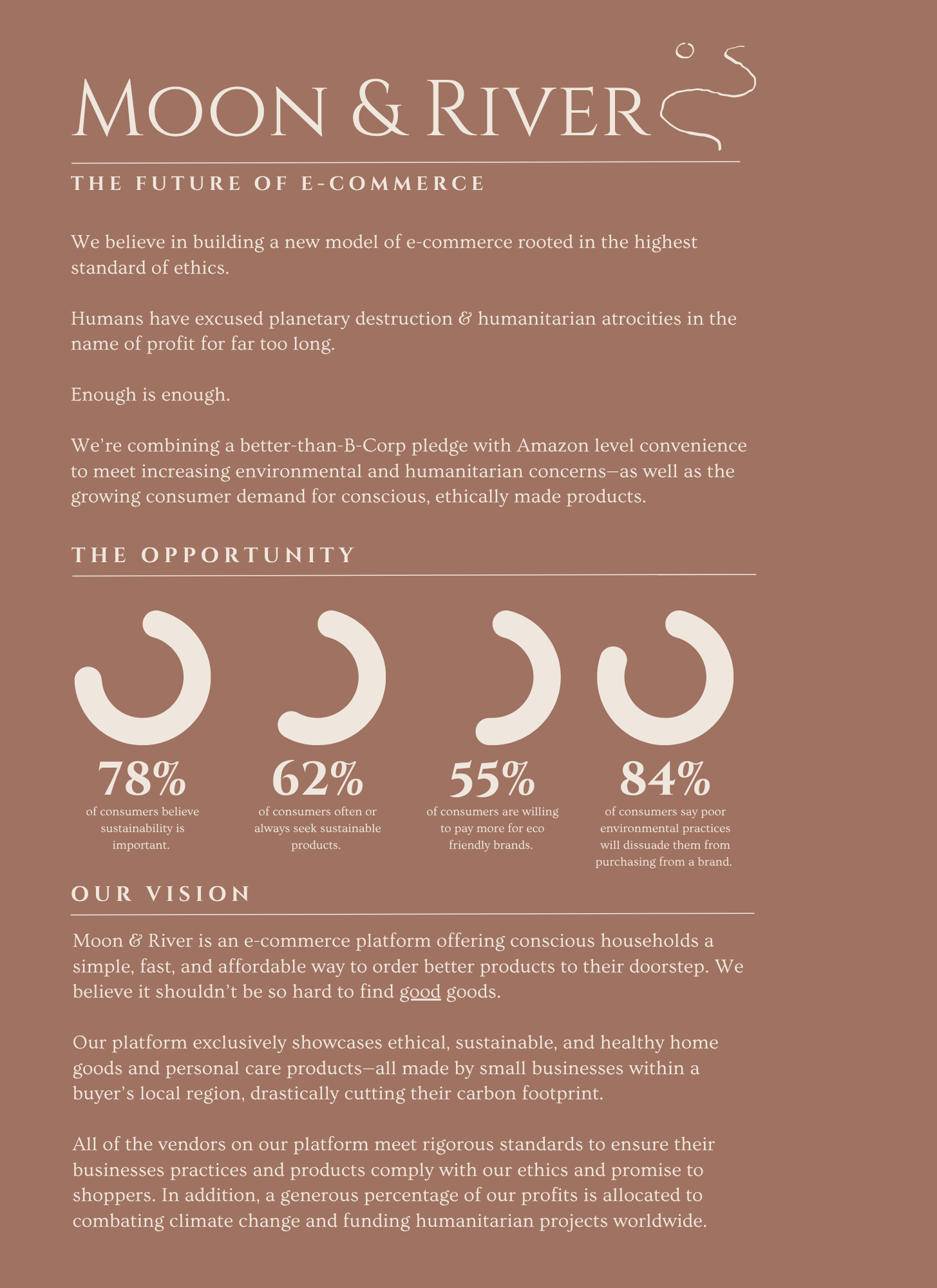
Modern commerce optimizes for convenience and scale, but often at the expense of communities, ecosystems, and product quality. Consumers increasingly want to support local businesses and make more conscious purchasing decisions, yet discovering trustworthy alternatives remains difficult. Independent makers are scattered across marketplaces, social platforms, local directories, and individual websites.
Moon + River began with a simple question.
What if supporting local businesses was easier than shopping from global supply chains?
Rather than asking consumers to sacrifice convenience in order to align with their values, the platform was designed to make local purchasing the most practical choice available.
The goal was not simply to create another marketplace, but the infrastructure for a more regenerative local economy.
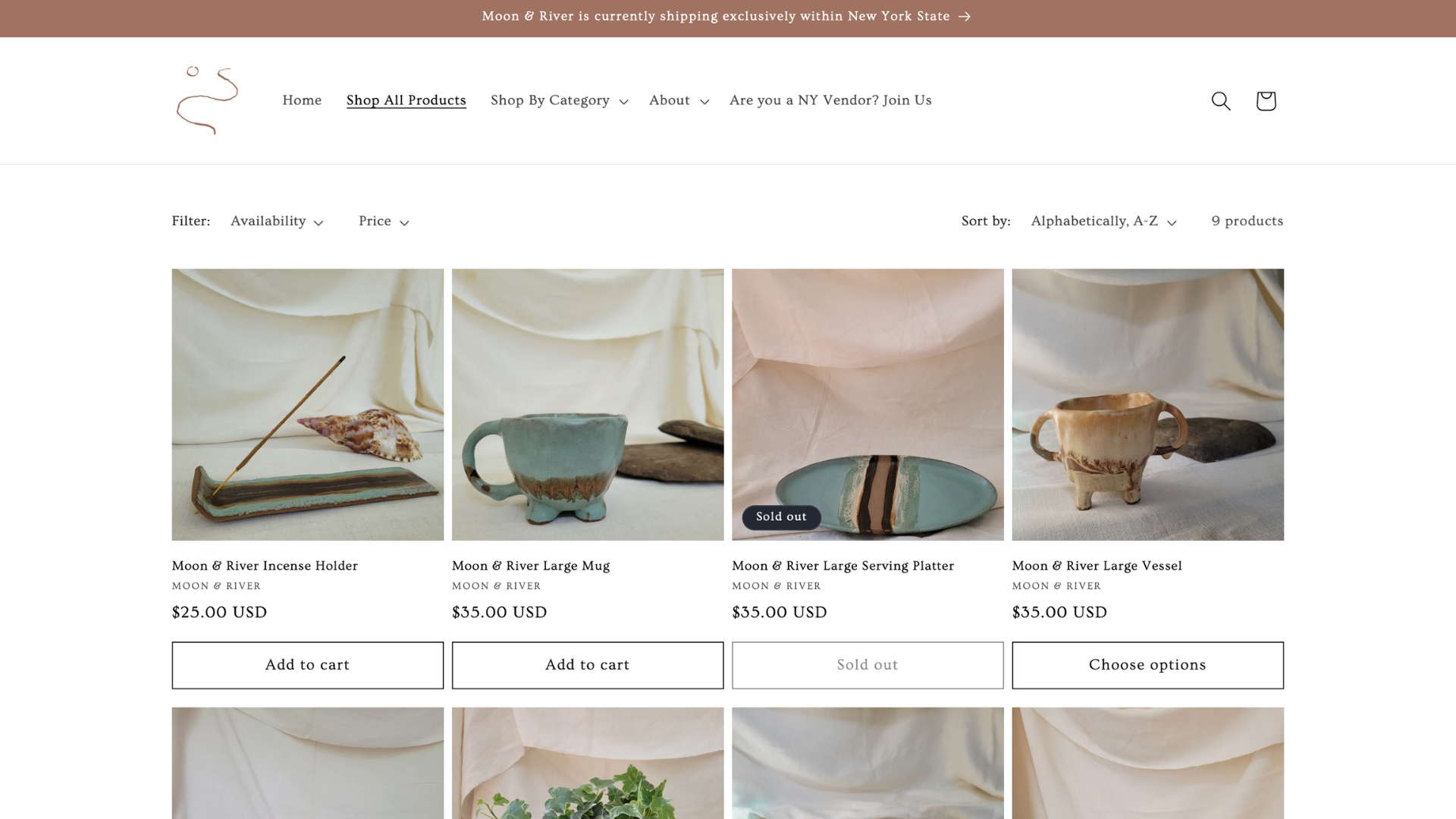
Moon + River connects consumers with vetted local makers, producers, and small businesses based on geographic region. By entering a zip code, users can discover home goods, clothing, beauty products, household essentials, and pantry staples produced closer to home.
Unlike traditional marketplaces, vendors are listed free of charge. Businesses benefit from visibility regardless of whether customers ultimately purchase through the platform.
Consumers can either shop directly with individual vendors or choose the convenience of a unified checkout experience for a small service fee.
The platform was intentionally designed to avoid becoming a gatekeeper. Discovery remains open, while convenience becomes the value-added service.
This approach creates value for buyers, vendors, and local communities simultaneously. Businesses gain exposure, consumers gain trusted recommendations, and regional economies retain a greater share of economic activity.
Trust is the foundation of the platform. Rather than relying solely on marketing claims, every participating vendor is evaluated against a qualification framework designed to identify businesses creating meaningful positive impact.
The framework examines six core areas:
• Humanitarian Impact
• Animal Welfare
• Environmental Stewardship
• Human Health
• Local Material Sourcing
• Local Production
These standards establish a high bar for participation while allowing room for thoughtful discretion when circumstances warrant flexibility. The goal is not ideological purity, but a practical framework that helps consumers make informed purchasing decisions without conducting extensive research themselves.
By performing this due diligence upfront, Moon + River transforms trust into infrastructure.
The marketing system was designed around education, storytelling, and relationship building rather than traditional sales funnels.
Paid advertising directs consumers to free local vendor directories rather than product pages. Visitors receive immediate value through curated recommendations before being asked for any commitment.
Those who choose to create an account receive complimentary shipping on their first purchase and ongoing access to educational content.
A weekly newsletter, editorial features, social content, and long-form storytelling highlight participating vendors while educating consumers about sustainable production, ethical sourcing, local manufacturing, and conscious consumption.
Rather than extracting attention, the marketing system cultivates trust by helping people discover businesses already creating meaningful positive impact.
Moon + River explores a future where convenience and stewardship no longer exist in opposition.
The project challenges the assumption that scale requires centralization. By combining modern ecommerce infrastructure with local production, trusted curation, and relationship-based marketing, it demonstrates how technology can strengthen local economies rather than abstract them.
The project serves as a blueprint for a more regenerative model of commerce—one designed to create value for consumers, producers, communities, and ecosystems simultaneously.