Proptech startup brand launch, 2021-2023
From lead generation to relationship building: creating a more human real estate experience.
Scroll ↓
Contributions
Marketing Director: Market Positioning | Brand + Messaging Strategy | Visual Identity Direction | Business Model Development | Content + Growth Strategy
Landslo began as an attempt to solve a costly problem in real estate: agents needed a steady flow of qualified leads, but existing lead-generation systems weren't translating into transactions.
As we dug deeper, we discovered that the real issue wasn't lead generation—it was communication.
Agents were overwhelmed by the volume of contacts and personalized communication required to build consistent business. Buyers, meanwhile, wanted guidance without pressure and often began their search months or even years before they were ready to transact. Agents wanted to provide that experience, but it was logistically unsustainable.
Landslo was created to bridge that gap: an AI-powered assistant designed to support buyers throughout the homeownership journey while connecting them with the right agent at the right moment.
The challenge wasn't explaining what Landslo did. It was defining what Landslo meant to the people it served.
The technology solved a practical problem, but the brand needed to solve an emotional one: building trust in an industry where both agents and buyers had become skeptical of automated outreach, sales tactics, and impersonal, high-pressure experiences.
My role was to uncover the deeper truth beneath the product and translate it into a brand people could immediately understand, trust, and rally behind.
Landslo’s brand voice needed to capture the frustration felt by both sides of the industry while positioning itself as the low-friction mediator in a broken relationship.
Rather than positioning Landslo as another lead-generation tool, we positioned it around the outcome agents actually wanted: lead conversion.
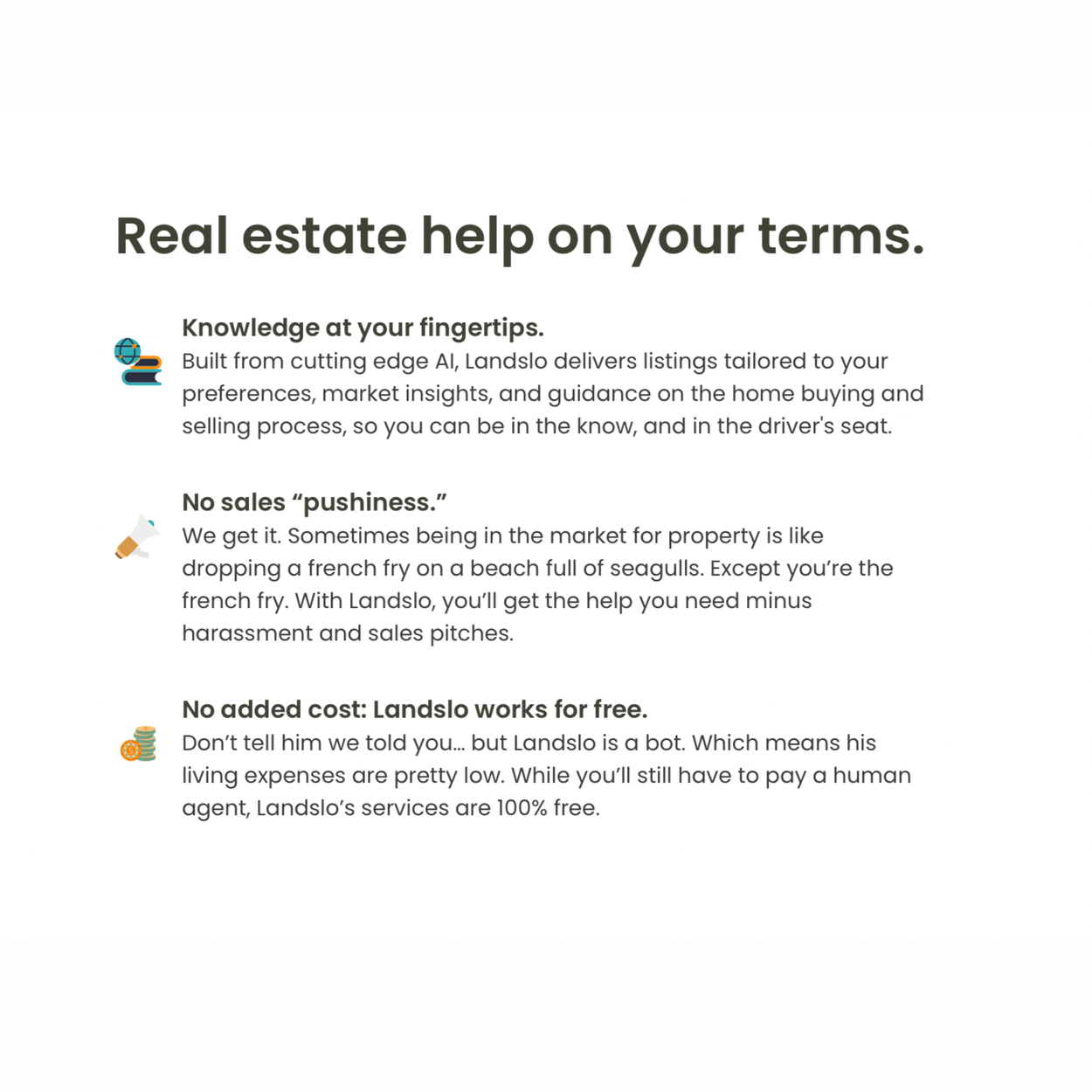
For buyers, I developed a witty, approachable voice that cut through the noise of traditional real estate marketing and acknowledged what home buying often feels like in practice: overwhelming, confusing, and frequently pressured.
For agents, the messaging focused on a simple but powerful idea. No realtor wanted another lead-generation product. They wanted a way to convert the leads they already had without adding more outreach, more follow-up, or more pressure to the process.
The positioning was clear: no more selling or being sold to. Just a piece of technology that connects people who can help each other at the exact right moment.
The voice was even clearer: no nonsense. Just honest (and occasionally humorous) truth about what home buying can feel like when done right.
The visual identity evolved alongside the messaging strategy.
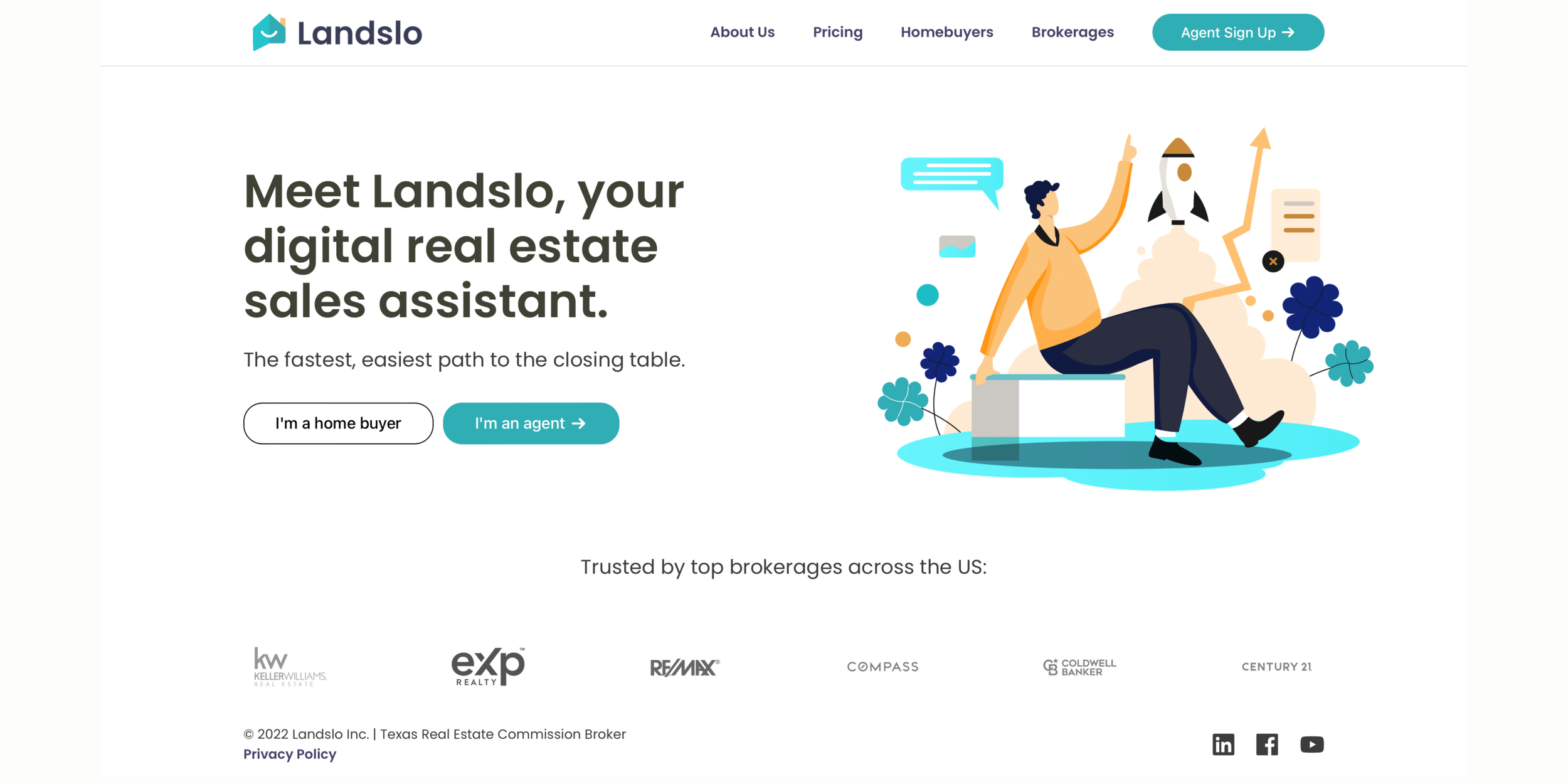
The original brand leaned heavily into a traditional B2B technology aesthetic: dark blue backgrounds, corporate design conventions, and a serious visual tone. While credible, it lacked the warmth and approachability required to support Landslo’s new positioning.
I chose to work with the friendliness already embedded in the company name and logo, extending that sense of ease throughout the entire identity system.
The resulting visual language was brighter, simpler, and more human. Playful without feeling immature. Trustworthy without feeling corporate. Modern without relying on the visual clichés common throughout both the AI and real estate industries.
The result was a visual identity that made AI-assisted home buying feel less like technology and more like guidance.
If the brand stood for trust, transparency, and reducing pressure in the home-buying process, the business model and growth strategy needed to reflect those values as well.
Rather than relying on aggressive sales tactics, we experimented with lower-friction revenue models that aligned incentives across the ecosystem. Buyers received support at no cost, while real estate partners paid only when meaningful value had been created.
Growth followed the same principle. Instead of cold outreach at scale, we focused on creating spaces where agents could learn, connect, and contribute. Through educational content, virtual events, community-building initiatives, a podcast, and strategic partnerships, Landslo became known not simply as another real estate technology company, but as a fresh perspective on an industry ready for change.
The goal wasn't to pressure people toward a transaction. It was to create the conditions for the right transaction to happen naturally.
By aligning the business model, marketing strategy, and customer experience around the same core philosophy, the brand became more than a message. It became an operating principle.
The result was a brand that resonated with both sides of the marketplace.
During my time with Landslo, the company secured its first revenue, established enterprise relationships with major real estate organizations, and successfully completed a seed funding round.
More importantly, the brand generated momentum. The positioning created immediate resonance with agents, partners, and investors alike, proving that trust and human connection can be powerful growth drivers in industries traditionally dominated by sales pressure and transactional thinking.
What began as a lead-conversion platform evolved into something much larger: a brand that challenged long-standing assumptions about how technology, trust, and human relationships can coexist within the real estate industry.